
How Estero HOA Boards Can Improve Storm Preparedness and Homeowner Communication
For an HOA or condominium board in Estero, storm preparation is about more than securing outdoor furniture and checking the landscaping.
It is also about communication.
When severe weather approaches, homeowners want to know what is happening, what they need to do, and where to turn if something goes wrong. If that information is difficult to find or arrives too late, even a well-prepared community can feel disorganized.
Estero’s location in Southwest Florida makes storm planning an important part of community management. HOA and condo boards have to think about common areas, landscaping, drainage, buildings, vendors, insurance, emergency contacts, and homeowner communication. They also need a plan for what happens after the storm.
The good news is that effective preparation does not have to be complicated.
A clear process, reliable vendors, accurate contact information, and consistent communication can make a major difference.
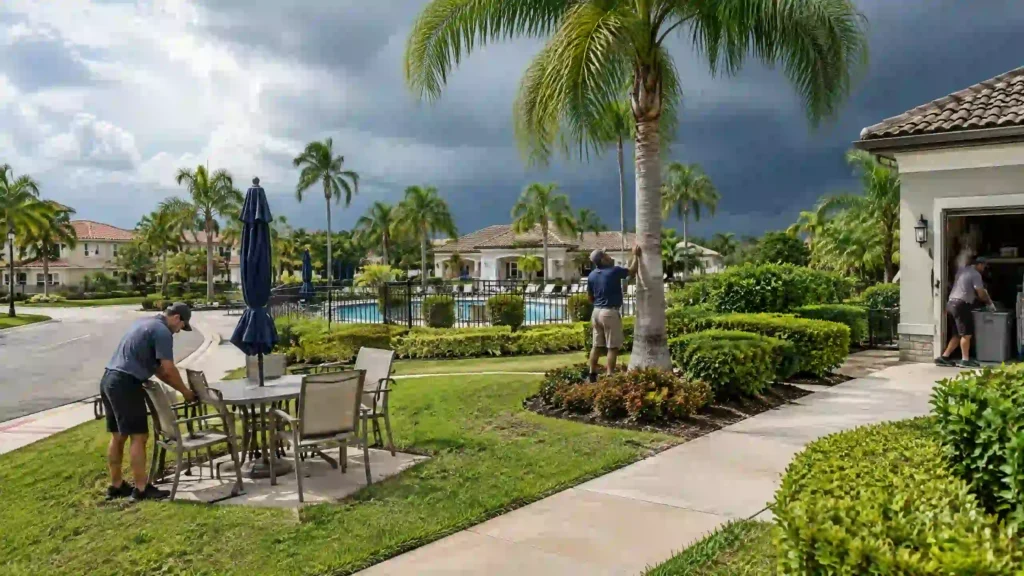
Start With a Community-Specific Storm Plan
Every community is different.
A condominium association may have concerns about common building systems, elevators, garages, generators, roofs, and shared facilities. A homeowners association may need to focus more heavily on roads, drainage, landscaping, gates, clubhouses, pools, and other common elements.
That is why a generic storm checklist is rarely enough.
The board and management team should identify the areas of the community that require attention before, during, and after severe weather.
For example, the plan might address:
- Who contacts landscaping and tree contractors
- Who handles emergency maintenance requests
- How homeowners receive urgent announcements
- Where important vendor information is stored
- Who has access to community facilities
- How storm damage will be documented
- Who communicates with insurance representatives
- How post-storm inspections will be coordinated
The goal is not to predict exactly what will happen.
It is to make sure everyone knows what to do when something does happen.
Make Homeowner Communication Simple
During a storm, homeowners should not have to search through old emails to find an emergency number.
Important information should be easy to access.
A community can use several communication channels depending on its needs, including email, resident portals, text notifications, posted notices, and the association’s website.
The most important thing is consistency.
If one homeowner receives an update by email while another hears something different from a neighbor, confusion grows quickly. A centralized communication process gives residents one reliable source of information.
It can also help to establish different types of messages.
A routine update might explain upcoming landscaping work. A storm alert may provide immediate preparation instructions. A post-storm message might explain when inspections will occur and how residents should report damage.
Keeping those messages separate makes them easier to understand.
Keep Emergency Contact Information Current
A storm plan is only useful if the people listed in it can actually be reached.
Boards should periodically review contact information for:
- Property management staff
- Board members
- Maintenance contractors
- Landscaping companies
- Plumbers
- Electricians
- HVAC contractors
- Restoration companies
- Roofing contractors
- Insurance contacts
- Utility providers
- Emergency services
This is especially important for communities that rely on outside vendors.
A contractor who was available two years ago may no longer service the area. A phone number may have changed. A company may have new ownership or different emergency procedures.
Reviewing these details before storm season is much easier than discovering a problem at midnight after a major weather event.
Give Vendors Clear Expectations
Storm preparation often depends on outside contractors.
However, simply having a vendor list does not guarantee that help will be available when the community needs it.
Boards and management teams should understand what their service agreements cover and what happens during an emergency.
Questions worth asking include:
Does the vendor provide emergency service?
How quickly can the vendor respond?
Is emergency work included in the existing agreement, or is it billed separately?
Who is authorized to approve additional work?
What happens if the vendor cannot respond?
These conversations are easier to have before severe weather arrives.
Good vendor coordination can also prevent multiple people from contacting the same contractor about the same problem.
Pay Attention to Trees and Landscaping
Southwest Florida’s vegetation is beautiful, but trees and landscaping can become a significant concern during severe weather.
The University of Florida IFAS Extension recommends maintaining trees properly and addressing potentially hazardous branches before storms threaten. It also recommends securing loose landscape items when severe weather is approaching.
That makes routine landscaping more than a cosmetic concern.
Before storm season, an HOA or condominium association should look at trees, drainage areas, irrigation equipment, signage, outdoor furniture, decorative features, and other items located in common areas.
A landscape inspection can identify problems while there is still time to address them safely.
It is much better to discover a weak branch during a scheduled inspection than after it lands on a walkway, vehicle, or building.
Know What the Association Is Responsible For
One of the most important parts of storm preparedness is understanding responsibility.
Who repairs a damaged roof?
Who handles a damaged screen enclosure?
Who maintains a drainage system?
Who contacts the insurance carrier?
Who is responsible for damage inside an individual unit?
The answer can depend on the governing documents, applicable law, insurance policies, and the specific type of community.
Florida law establishes responsibilities for associations and their members, but the details can vary considerably depending on the property and governing documents.
For example, Florida’s condominium and homeowners association laws contain different provisions governing association responsibilities and community operations. Boards should therefore avoid assuming that a rule applying to one type of community automatically applies to another.
When there is uncertainty, the association’s attorney and insurance professionals can provide guidance specific to the community.
Document the Property Before a Storm
Good records can become extremely valuable after a storm.
Before severe weather, communities can maintain records of common-area conditions, equipment, buildings, landscaping, and other significant assets.
Photographs can be particularly useful.
The purpose isn’t to create a complicated archive. It is simply to establish a record of the property’s condition before an event occurs.
Afterward, photographs and inspection notes can help the board and management team identify what changed.
Documentation may also help when working with insurance professionals, contractors, and restoration companies.
Have a Plan for Post-Storm Inspections
The storm itself may only last a few hours.
The recovery process can take much longer.
Once conditions are safe, the community needs a method for identifying damage and prioritizing repairs.
The first inspection should focus on obvious safety concerns. Downed electrical lines, unstable structures, blocked access routes, major flooding, and other hazards need to be addressed before routine maintenance begins.
After immediate safety issues are identified, the management team can organize additional inspections and repairs.
It helps to separate problems into categories such as:
Emergency: Immediate threat to people, property, or access.
Urgent: Significant damage that should be addressed quickly but does not present an immediate emergency.
Routine: Repairs that can be scheduled after more pressing work has been completed.
This approach gives everyone a clearer picture of what needs attention first.
Keep Homeowners Updated After the Storm
Communication becomes just as important after the storm as it was before it.
Residents may be worried about their homes, vehicles, neighbors, amenities, and access to the community. They may also see damage that management has not yet discovered.
A useful post-storm update can explain:
- Whether the community has been inspected
- Which common areas are affected
- Whether amenities are open or closed
- Whether contractors have been contacted
- How residents should report concerns
- Whether additional inspections are planned
- When the next update is expected
Even when there is no new information, telling homeowners when they can expect another update can reduce uncertainty.
People generally handle delays better when they understand what is happening.
Technology Can Make Communication Easier
Modern community management systems can make it easier to keep homeowners informed.
A resident portal can provide a central location for announcements, documents, maintenance requests, and community information. Email and text alerts can be used for time-sensitive notices.
The technology itself, however, is only part of the solution.
The real benefit comes from having an organized process behind it.
Someone needs to know what information should be sent, who approves it, and how quickly it needs to reach residents.
For HOA and condominium boards, that coordination can become difficult when volunteers are already balancing meetings, budgets, rules, projects, and homeowner concerns.
Prepared Communities Are Built Before the Storm
Storm preparedness is not something an HOA board can create in a single afternoon.
It develops through ordinary management decisions made throughout the year.
Keep vendor information current.
Maintain common areas.
Review service contracts.
Document important property conditions.
Understand insurance responsibilities.
Keep homeowners informed.
And make sure there is a clear process for handling emergencies.
Florida law also places maintenance responsibilities on landlords and tenants in residential tenancies, while community associations operate under their own statutory and governing-document frameworks. That distinction is one reason boards should make decisions based on the specific type of community rather than relying on generic property-management advice.
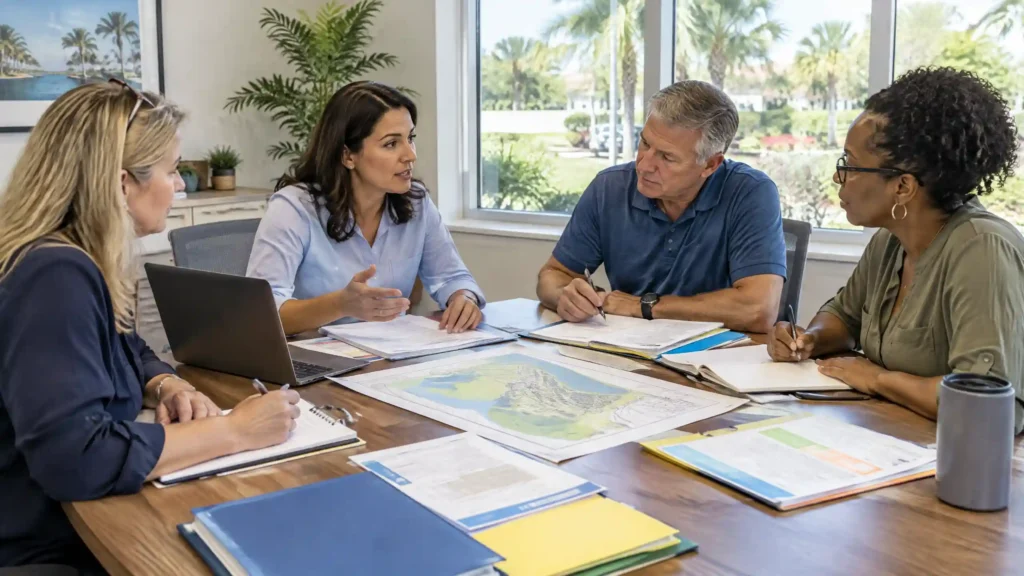
How Professional Community Management Can Help
For a volunteer HOA or condominium board, the hardest part is often not knowing that preparation matters.
It is finding the time to coordinate everything.
A professional management team can help organize vendor relationships, maintenance coordination, homeowner communication, meetings, financial information, and day-to-day community operations.
For communities in Estero and throughout Southwest Florida, local knowledge also matters. Weather, landscaping, building conditions, vendors, and community expectations are not identical everywhere.
Homestead Property Management South provides HOA and condominium association management in Southwest Florida, with services that include maintenance coordination, service contracts, homeowner communication, meeting oversight, insurance compliance, financial management, and day-to-day operations.
The purpose of storm preparation is not to guarantee that a community will avoid damage.
No management plan can make that promise.
The goal is to make sure the community is organized enough to respond when something does happen.
For an Estero HOA or condominium association, that preparation can give board members and homeowners something valuable when severe weather arrives: a clear plan and a reliable way forward.
Reliable Sources:
- Florida Senate — 2026 Florida Statutes, Chapter 83: current residential landlord/tenant requirements.
- Florida Legislature — Chapter 720: current homeowners association statutory requirements, including provisions concerning association governing documents and rental agreements.
- University of Florida IFAS Extension: Florida landscaping and storm-preparation guidance.
- Homestead Property Management South: current service offering and Estero/Southwest Florida focus.