
How to Prepare Your Estero Rental Property for Snowbird Season
September can feel like the quiet part of the year in Southwest Florida.
The summer heat is still hanging around, hurricane season is still on everyone’s mind, and the pace of local life can seem a little slower. But for rental property owners, this is actually an important time to start looking ahead.
Winter will arrive sooner than it seems.
Estero attracts residents and visitors who enjoy spending part of the year in Southwest Florida, and some rental owners specifically cater to seasonal tenants. VISIT FLORIDA notes that seasonal residents, often called snowbirds, are not tracked as a distinct visitor category because many own homes here and live in Florida only part of the year.
That makes the seasonal rental market a little different from a traditional year-round rental.
A property may need to be ready for someone who is arriving with luggage, expecting a comfortable home, and planning to settle in for several months. A dripping faucet or tired patio furniture that might not bother a long-term tenant during a quick inspection can suddenly become very noticeable to a seasonal resident.
If you own a rental property in Estero, now is a good time to ask a simple question:
Would my property be ready if a tenant arrived tomorrow and planned to stay all winter?
If the answer is anything less than an enthusiastic yes, there is still time to make improvements.
Start With the First Impression
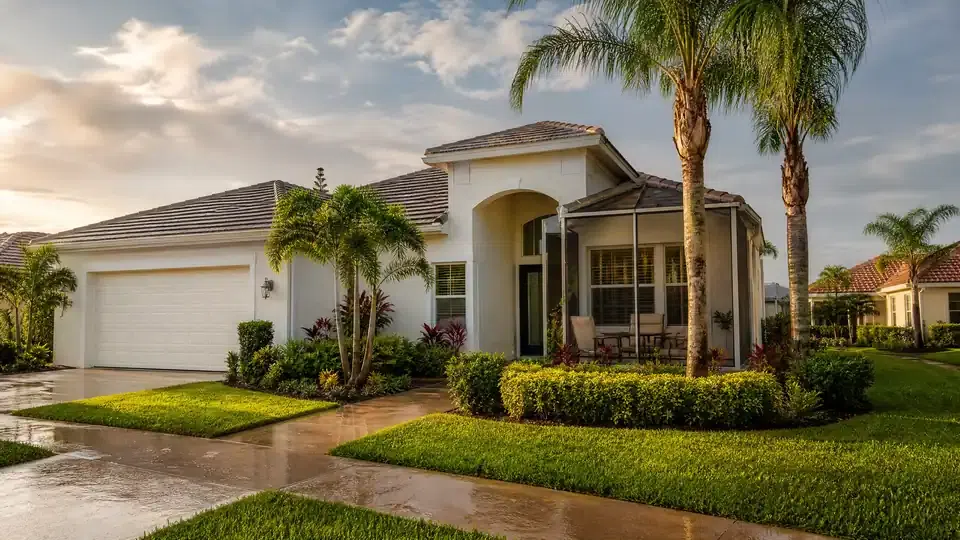
Before thinking about upgrades, walk up to the property as though you’ve never seen it before.
What do you notice?
Is the landscaping neat? Are the entry doors clean? Does the driveway look cared for? Are the exterior lights working? Is the mailbox in good condition?
These details may seem small, but they create the first impression of a rental home.
A seasonal tenant is not simply looking for four walls and a roof. They are choosing where they will spend an important part of their year. A clean, comfortable, well-maintained property immediately feels more inviting.
This doesn’t mean an owner needs to spend thousands of dollars on cosmetic improvements. Often, the difference comes down to cleaning, replacing worn items, touching up paint, and taking care of the little things that have accumulated over time.
Check the Air Conditioning Before Winter Tenants Arrive
It might sound strange to emphasize air conditioning when preparing for winter, but this is Florida.
Your property’s HVAC system remains important throughout the year.
Before a seasonal tenant arrives, make sure the system is operating properly, filters are clean, condensate drainage is functioning, and the property is maintaining comfortable indoor temperatures.
This is also a good time to look for unusual noises, weak airflow, unpleasant odors, or inconsistent cooling.
A tenant arriving from a colder climate may be particularly sensitive to indoor comfort. More importantly, an HVAC problem that could have been identified during a routine inspection can become an after-hours emergency once the tenant has moved in.
Preventive attention is usually easier for everyone.
Don't Forget the Small Repairs
Walk through the home slowly.
Not as an owner.
Not as a property manager.
Walk through it as the tenant.
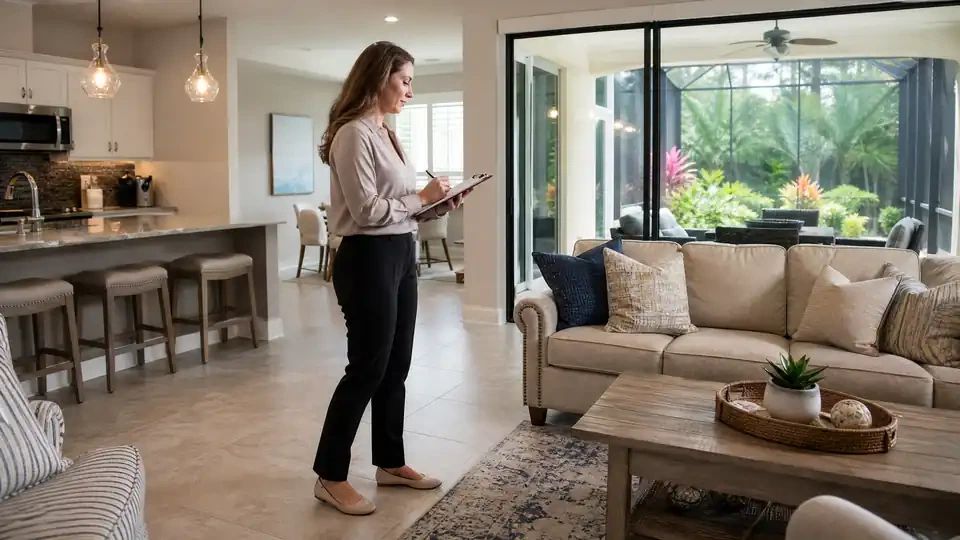
Open every cabinet. Turn on every light. Test the ceiling fans. Flush the toilets. Run the faucets. Open and close the windows. Check the doors and locks.
Look at the things that people tend to overlook between tenants:
- Loose cabinet handles
- Sticking doors
- Dripping faucets
- Burned-out bulbs
- Damaged screens
- Worn caulking
- Loose towel bars
- Scuffed walls
- Noisy ceiling fans
- Slow drains
None of these issues are particularly dramatic.
That’s precisely why they’re easy to ignore.
But fixing ten small problems before a tenant arrives can make a home feel dramatically better maintained.
Take a Close Look at the Outdoor Space
Outdoor living is one of the reasons people love Southwest Florida.
That means the patio, lanai, pool area, balcony, and landscaping deserve the same attention as the interior.
Make sure outdoor furniture is clean and in good condition. Check screens for damage. Look at pool equipment if the property has a pool, and make sure exterior lighting works properly.
Landscaping deserves special attention as well.
University of Florida IFAS recommends keeping trees properly maintained before storms and removing hazardous branches well in advance. It also recommends securing loose outdoor items when a storm threatens.
For an Estero rental property, this is especially useful because preparation for the winter rental season overlaps with hurricane-season property care.
In other words, September is a good month to address both.
Make Sure the Home Is Comfortable, Not Just Functional
There’s an important difference between a property being rentable and a property being pleasant to live in.
A tenant might technically have everything required to live in a home, but that doesn’t mean they’ll love living there.
Think about comfort.
Are the mattresses still in good condition? Are there enough lamps? Are kitchen utensils and cookware usable? Are there enough hangers? Does the living room furniture still look inviting?
If the property is furnished, take a realistic look at it.
Furniture doesn’t have to be luxurious. It does need to be clean, functional, and appropriate for the space.
The same applies to linens, towels, kitchen equipment, and small appliances.
Replacing a few tired items can sometimes make a bigger difference than a major renovation.
Review Safety Items Before the Property Is Occupied
Safety should never be treated as an optional upgrade.
Owners and managers should make sure important safety equipment is functioning and that the property is being maintained according to applicable Florida requirements and local rules.
HUD’s inspection standards, for example, identify items such as smoke alarms, carbon monoxide alarms, windows, doors, water heaters, ventilation, and site drainage among areas that can be inspected in housing programs.
The exact requirements for a privately owned Florida rental can vary, so owners should confirm applicable requirements rather than relying on a generic checklist.
The important point is simple: don’t wait until a tenant reports a safety problem.
Check the Property's HOA Requirements
This is particularly important for Estero owners.
Many communities have rules concerning rentals, leasing periods, parking, pets, guests, exterior modifications, amenities, and tenant registration.
Before advertising a property for a seasonal tenant, confirm that the proposed rental arrangement complies with the community’s current rules.
Also check whether the HOA requires an application, approval, background screening, registration, or other documentation.
This is one area where a property manager can save an owner considerable frustration. Keeping track of community requirements becomes much easier when someone is already familiar with the property’s association and rental procedures.
Review Your Rental Listing Before the Busy Season
When was the last time you looked at your property’s listing from a tenant’s perspective?
If the photographs are several years old, the furniture has changed, or the landscaping looks different, it may be time for an update.
Good listing photographs should accurately represent the property. Don’t make the home look dramatically better online than it does in person.
Instead, make the real property look its best.
Clean spaces, natural lighting, uncluttered rooms, and photographs that show the home’s most useful features can help prospective tenants understand what they’re actually renting.
For a seasonal rental, consider highlighting practical features such as:
- Furnished living spaces
- Outdoor areas
- Pool or community amenities
- Parking
- Laundry facilities
- Kitchen equipment
- Internet availability
- Proximity to everyday conveniences
The goal isn’t to oversell the property.
It’s to help the right tenant recognize that it could be a good fit.
Don't Forget Fair Housing Rules
Seasonal rentals still need to be marketed and managed consistently with applicable fair housing laws.
The federal Fair Housing Act prohibits discrimination in housing based on race, color, national origin, religion, sex, familial status, and disability.
That matters when creating advertisements, responding to inquiries, screening applicants, and establishing rental policies.
It is easy for informal language or seemingly harmless preferences to create problems. Property owners who are unsure about advertising or screening practices should seek qualified legal or professional guidance.
A good rental strategy isn’t simply about filling the property.
It’s about filling it properly.
Prepare for the Tenant Who Isn't From Florida
One of the interesting things about seasonal rentals is that the tenant may know very little about the property or the local climate.
They may be arriving from a place where freezing temperatures are normal in January.
Florida’s winter is a completely different experience.
A useful move is to provide a simple property information sheet covering practical details such as:
- How to operate the thermostat
- Trash and recycling procedures
- Parking rules
- Emergency contacts
- Appliance instructions
- Pool or amenity rules
- Internet information
- HOA requirements
- Maintenance reporting procedures
This doesn’t need to be a huge handbook.
A clear, easy-to-follow guide can prevent many unnecessary questions during the first few days of a tenant’s stay.
Think Beyond the Tenant's Arrival Date
Good property management doesn’t stop when the tenant receives the keys.
Seasonal tenants may stay for several months. During that time, the property still needs attention.
Landscaping continues. HVAC systems need to operate. Plumbing problems can happen. Storms can occur. Appliances can fail.
That’s why seasonal rental management requires more than simply finding a tenant.
Someone needs to be available when something goes wrong.
For an owner who lives outside Estero—or simply doesn’t want to spend their winter coordinating plumbers, landscapers, inspections, HOA questions, and tenant communications—that local support can make a significant difference.
Why September Is a Smart Time to Start
The biggest mistake an owner can make is waiting until the property is already booked.
By then, every repair becomes urgent.
September provides breathing room.
You can inspect the home, schedule contractors, replace worn furnishings, update photographs, review the listing, confirm HOA requirements, and address maintenance issues before the winter rental period gets busy.
And because hurricane season runs through November 30, some of this preparation serves two purposes. UF/IFAS notes that August and September are generally the most active months of Florida’s hurricane season, making early preparation particularly worthwhile.
A property that is storm-ready, clean, comfortable, and properly maintained is also in a much better position for incoming seasonal tenants.
A Well-Prepared Rental Is Easier to Manage
Preparing an Estero rental property for snowbird season isn’t about making the home perfect.
It’s about making sure the obvious problems have been handled before someone else discovers them.
Take care of the dripping faucet. Replace the broken screen. Service the AC. Clean the patio. Check the safety equipment. Review the HOA rules. Update the listing. Walk through the home one more time.
Those small decisions add up.
For property owners, they can mean fewer emergency calls, happier tenants, better reviews, and less stress throughout the rental period.
And for owners who don’t live nearby or don’t have the time to coordinate all of these details themselves, a local Estero property management team can take much of that work off their plate.
The winter rental season may still feel months away.
For a well-managed property, however, preparation starts now.
Reliable Sources:
- University of Florida IFAS Extension — Hurricane landscaping and storm preparation guidance.
- U.S. Department of Housing and Urban Development (HUD) — Fair Housing Act requirements and housing-provider responsibilities.
- VISIT FLORIDA Research — Information about Florida’s seasonal residents and tourism trends.
Learn more about our property management services in Estero and how Homestead Property Management South can help protect and manage your investment.